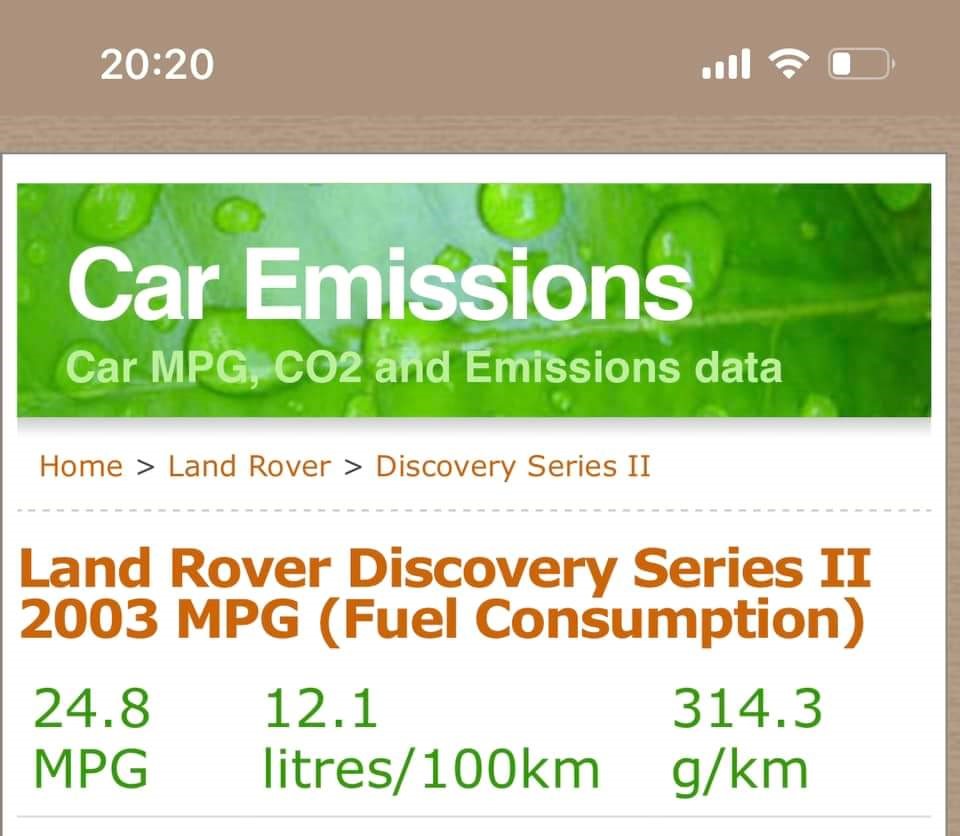
If you agree with this, you belong to the group ‘petrol heads’ and ‘deniers’. There are always groups that agree, partly agree or disagree entirely. That was already the case with the Romans, wasn’t it? But is your opinion correct? On this page, we will outline all the sensitive issues.
You’ll find information about batteries, lithium, synthetic fuel, biofuel, SAF, GTL, HVO, the fact that fuel doesn’t grow on trees, how much energy it takes to process crude oil into fuel before you fill up and e-Rovers racing hydrogen (using green electrolysis to recover hydrogen and convert it into electricity) for the Paris-Dakar Rally for testing our 3-in-1 electric motor in the toughest sand rally.
Don’t rely on algorithms. You’ll only read what you want to know. But is that really what’s going on? Look for multiple sources, especially those you completely disagree with. Just read through the whole page and you’ll be up to date with what is currently known.
You will notice that e-Rovers also express views on matters far beyond our own product. We think it’s better to explain than to argue.
The film shows the hidden costs and pollution involved in drilling for and processing fuel all the way to your petrol station. A comparison of the figures with electric driving (EV). Do fasten your seatbelt fot his page.
FROG
Can lead to an effect known as‘frog in the pan’syndrome. The heat in the pan increases slowly, but the frog remains there, gradually getting a little more comfortable each time, until the frog is finally almost boiled. It’s too late for the frog to jump out of the pan.
Deniers stay in the pan. A lovely picture illustrates this as well.
Do you ever stop to think that the research might actually be right? We’ll give you a few comparisons of what people used to think about smoking and asbestos. It wasn’t a problem at all – it was fine, wasn’t it? Let’s keep it light-hearted and funny, shall we?
Something to think about
In 1965, it was openly advertised that SMOKING was healthy; even doctors recommended smoking. They openly advise people to smoke. What about asbestos? No harm. That a great many people died from this here, we know today…
Back in 1966, it wasn’t a big deal. Now, in 2026, only 60 years later, we know better. In 2086, also 60 years from now, we’ll fear the same thing: nature survives; humans do not. It’s not a rocket science: research, interpreting figures, looking into the future. We’ve just seen the consequences of a melting glacier in Nepal, Petrolhead…
What’s going on?
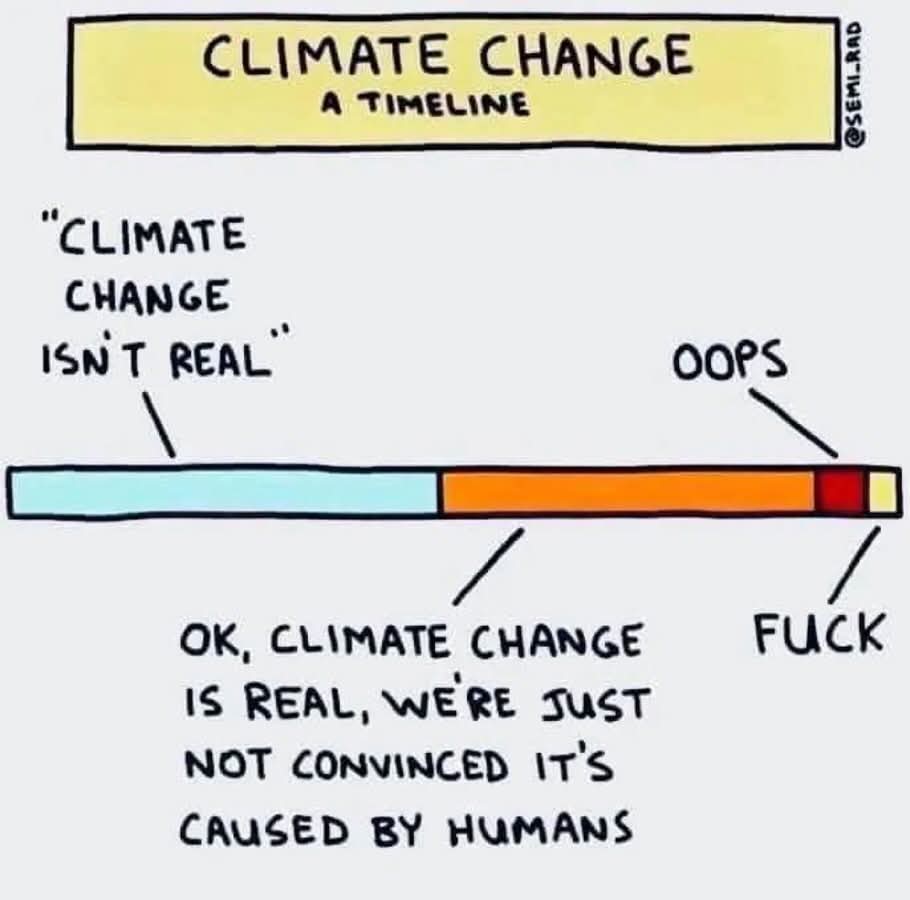
Of course, over millions of years, the world has already experienced various major climate changes. But that is not the point; nature can cope with this. HOWEVER, what many people do NOT realise is that since 1880, the start of industrialisation, there has been a massive polluting acceleration, with a second acceleration after 1970 and a third after 2004. Nature cannot cope with that. That is the crux of the matter.
The speed at which pollution is spreading is the cause for this. Global warming causes ice to melt and sea levels to rise. And warmer water has a greater volume than cold water, leading to a further rise in sea levels.
Denier: “The ozone hole – it’s gone, hasn’t it? So global warming will sort itself out, mate”. You hear and read that all the time on social media. That is what they believe. We’ll buy another steak and have a 30-minute hot shower. And they take the plane to Spain…..
For the sake of convenience, you’re forgetting this: the world reacted swiftly and quick to ban ozone-depleting substances from fridges and airco. And it succeeded. Ozon hole is closing.
We don’t do this with the climate. Strange, isn’t it? We are passing this legacy on to our children. “Sorry, we still need a bit more oil and gas, and that’s why we’re leaving your children with a 3 to 4-degree rise in temperature”.
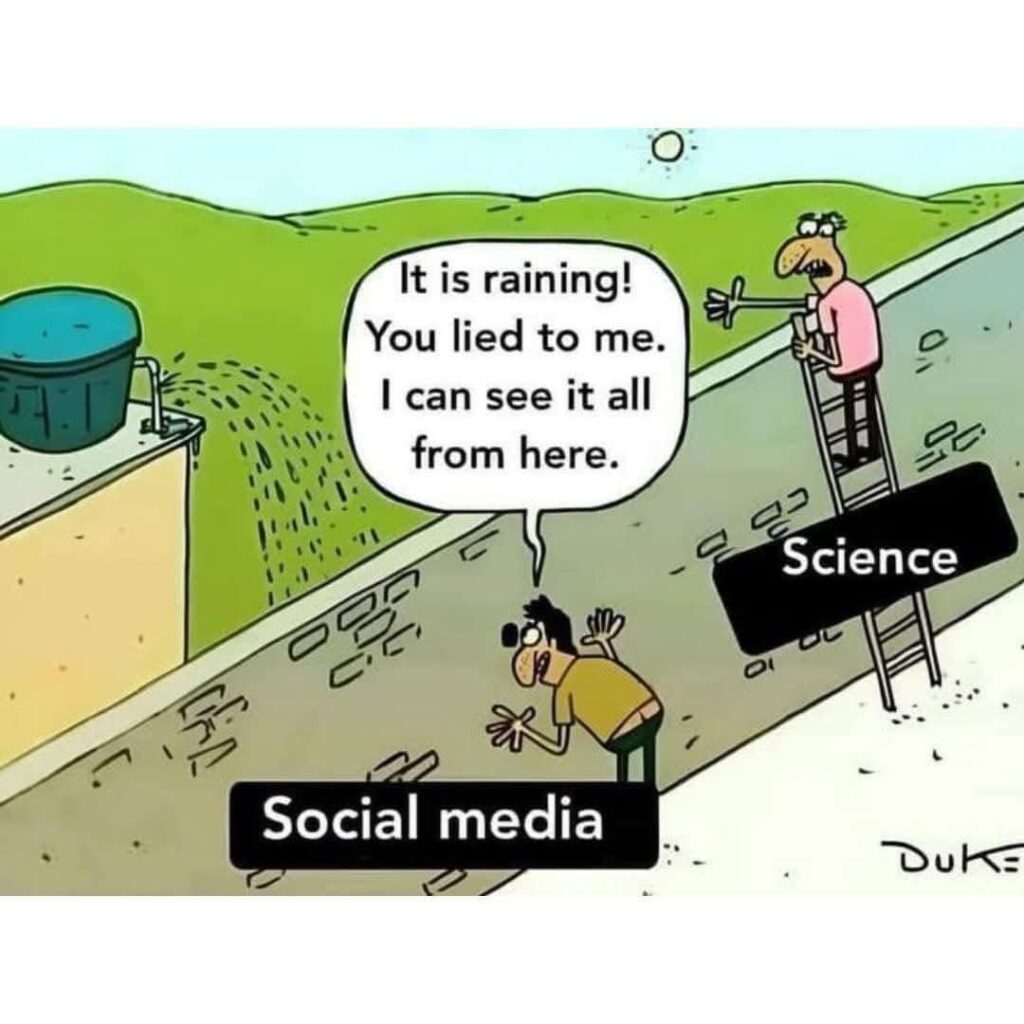
This IS social media below:
The only fair thing about climate change is that, ultimately, no one can escape its consequences….
Solar panels and batteries are bad, the new asbestos or smoking
That’s not true. Dutch TNO (and others) has developed a laser technology for recycling solar panels. This technology enables solar panels to be dismantled efficiently and at an energy-efficient manner. This allows more than 97 per cent of the silver and high-purity silicon used to be recovered. (source: change.inc, April 2026). Chopped into small pieces as a first step .
Used batteries are cut also into small pieces and thrown into a bath, a 135-metre-long tank of slowly flowing (water based) liquid. By using magnetic waves in the tank, the different metals separate naturally, until they can be collected at the end with 97% purity. Both methods are scalable to industrial level. The filtered water is back to the tank, and unusable scraps are turned into eco-building blocks. An additional benefit is that we can then re-use all those circular materials to make new solar panels and batteries. Which we shouldn’t have to buy from China again. If we use less oil, we will be less dependent on the Strait of Hormuz or other problems that may arise as a result of our dependence on others. Have you ever thought about this? (source: change.inc, November 2024)
95% of metals recovered
The Dutch company Back to Battery can process any black mass from any type of lithium-ion battery using a special hydrometallurgical process. This includes batteries from mobile phones, other electrical appliances, bicycles and cars. “We are very flexible. Our solvent can handle anything and extract raw materials from all existing types of battery chemistry,” says Lans (Brightlands Chemelot Campus). (source: change.inc Sept26)
When the batteries are ground down, the copper and aluminium are separated first. The black powder mainly consists of lithium, cobalt, nickel and graphite. These are all raw materials that the EU classifies as ‘critical’ because they are of strategic importance. Bad news for petrolheads, yet another argument shot down. (lol)
Solar, coal, oil and gas
Of course, solar panels also require energy to manufacture. However, on average, panels appear to generate that amount of energy within 2 years, after which they continue to supply energy for a further 20 years. Over their entire lifespan, therefore, around 10% of the energy supplied is used for their own production and transport. With coal, oil and gas, as much as 50% of the original energy is lost, and 80% is no exception. For hydrogen, the loss is 50% or more. At present, 90% of the raw materials can be recovered from old solar panels. With coal, oil and gas, that figure is 0%. The only result is emissions that nature can no longer cope with. (Source: Vincent Dekker, Trouw, 10 July 2026)
Just imagine if we were to use all the electricity needed to produce coal, oil, gas and hydrogen right now by feeding it directly into our electricity grid, for industry and households. You never hear anyone talking about that, or perhaps you simply don’t read about it. We devote a great deal of attention to the energy that refining now also consumes below.
Transition
That gradual change is now called “transition”. It doesn’t have to happen tomorrow, but it does have to happen within 30 years. Change is now. Cut back, cut back and cut back – that’s the story
Important: we always cite/quote the source of information. This texst not a matter of opinion; these are studies that have been carried out. Take a look at IPCC.CH for these studies. Link below.
Hidden pollutions
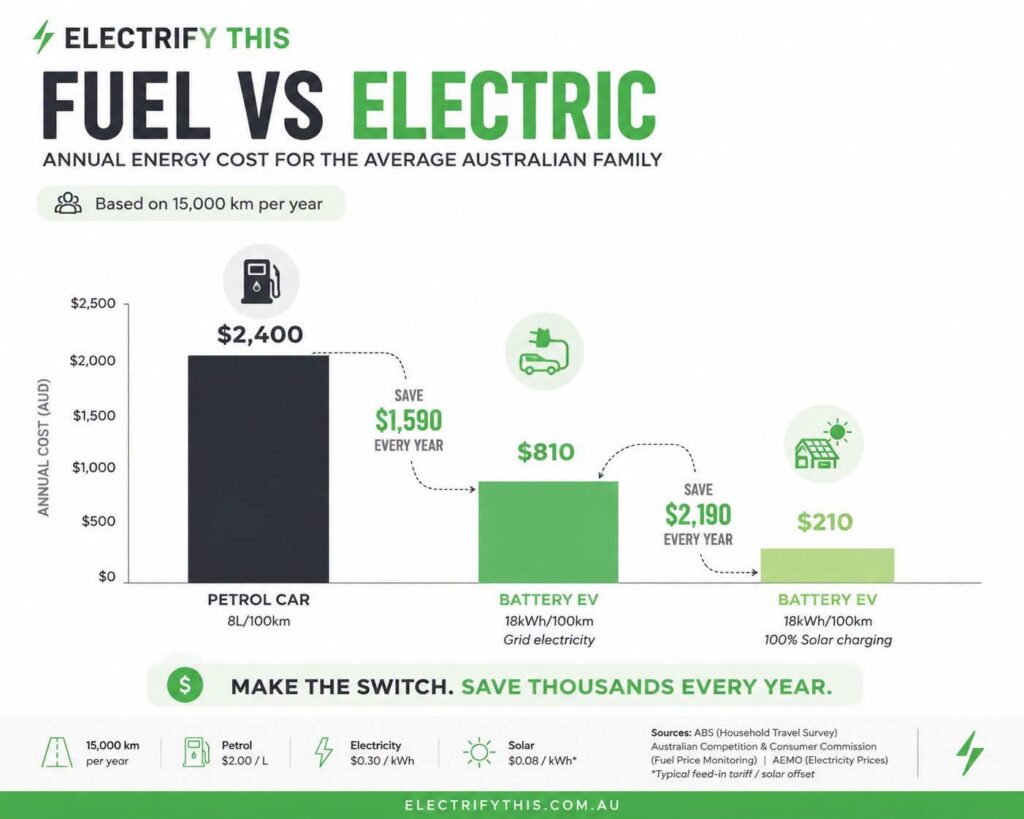
There are still things that many people do not realise. Do you know that we first need to generate electricity in order to operate an oil refinery? Research carried out in the UK has shown that 6,000 watts (6kW) electric power is used for every litre of fuel. And 27.000 watts (27kW) per gallon. Let that sink in for a moment. Doesn’t this mean that electric driving has already won the day? Yes mate. Here’s why:
A battery is not asbestos or a cigarette
Every electric motor converts more than 91% of its energy into power (through magnetism and rotation), whereas any 4-stroke internal combustion engine converts only 35%. Electric car batteries still performing remarkably well after 160,000 km/100.000miles. Virtually almost no degradation.
The subsidiary of the French bank BNP Paribas has conducted research into 24,000 electric cars, nearly 11,000 of which are in the Netherlands. These are models that have been resold in recent years following a lease period.
The performance trend is fairly predictable: after a slight degradation in the initial period, capacity decreases by an average of 1 per cent per 25,000km/15,500miles. This has been established by research.
In the Netherlands, we call this “the elephant in the room that no one wants to see”. Take the bull by the horns, climate change deniers! You don’t have to stay nice just to sell your product, do you? It’s all about understanding what’s actually going on – see the the elephant mate: nature does go wrong.
Fuel doesn’t grow on trees mate
First, pump it up from deep underground. Drill baby drill. Then we look into the necessary proces of refining closely, refining is heating, pumping, filtering, distilling, purifying, heating- and distilling again etcetera. Roughly speaking it’s a big electric energy intensive process: BAM: every litre of fuel produced requires 6.000-watts (6kW) of electric power. Each gallon of fuel requires 27.000-watts (27kW) of electric power. (4,45 litres is 1 UK gallon.) Scary to know? Nobody’s told you that, have they? Figures that have been kept under wraps. Banned from publication by the oil lobby worldwide.
How far can an electric car go on that 6kW?
6kW=33km electric driving using the electricity required to produce 1 litre.
27kW=23miles electric driving using the electricity required to produce 1 gallon.
You could conclude that an EV has already travelled far more distance, whilst a petrol car, using the same amount of electricity, is still stationary at the petrol station – it hasn’t even started driving yet. Even with the combustion engine still switched off.
(above figures for a VW e-buzz. Due to the 4 wheel drive and with the aerodynamics of a bungalow, e-Rovers have a 10 per cent shorter range, still 30km and 20,5 miles) e-buzz uses 18kW/100km/60miles WLTP, we do 20kW/100km/60miles WLTP).
Well, the Earth is quite big, isn’t it? So there’s no harm in any of that, mate
So that’s just another myth. All those collective polluting gases end up in the the thin skin around our Earth, the atmosphere above you, that is only 200 km/125 miles high before space begins, the black part above.
But this distance you cycle on a bike in 6 hours. … if you’re fit in 5 hours or less. It’s not nearly as big as you might think, mate. And all those collective polluting gases end up there.
Only 6 or 5 hours cycling for that distance? That’s not much. That shocks me. Us too.
That’s a whole bunch of pollutionin a thin layer. And there is exactly where we dump all these emissions day in day out, since the industrial revolution began 145 years ago. Nature cannot handle this anymore, thats the problem, it’s going too fast….. Thats the crux. Let that sink in for a moment, mate. We haven’t made this up, and it’s not a fairy tale either.
Data is no meaning
Can you trust data? Not on social media. Nono-people talk nonsens more and more. We’re showing this drawing above as well; we haven’t seen a clearer explanation in a single drawing anywhere else, so here it is again:
Check these ipcc to read : after research by universities around the world since 1965, all new data is double-checked, peer-viewed and published worldwide. Only then will it be published. So you can thrust the outcome. All these studies are ranked by the United Nations called the IPCC Panel. All three are reliable:
https://www.climate.us This new site was launched by former workers from the National Oceanic and Atmospheric Admin, when US Trump closed the official site recently. (Burn baby burn). He doesn’t like seeing his lies debunked by reputable organisations.
All peer-viewed. This means that it is not the opinion of an institution, but the result of thorough research.
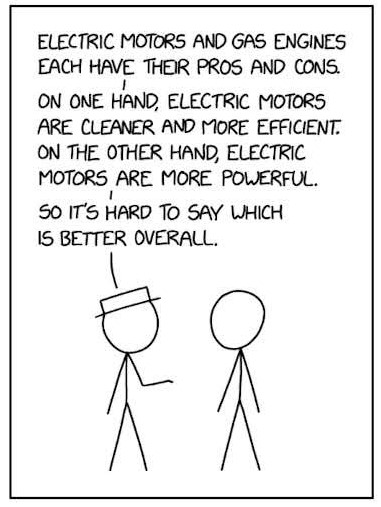
So do never believe the pic below. (social media trap)
Technology
Nature sceptics and petrolheads are pinning their hopes on technology to sort it all out for us. So you don’t need to change your comfortable little life. We’ll discuss a few tech on this page.
Hydrogen plans fade away
Where to use hydrogen? Where green hydrogen (H2) was presented in 2015 as a sustainable solution for all sectors – from fuel for passenger cars to heating homes – it is becoming increasingly clear, only in heavy industry where the energy carrier can make a difference. For example, as fuel for heavy road transport, sea shipping or in heavy industrial processes such as the production of steel, fertiliser and basic chemical elements. It’s no longer seen as a fuel for cars. The battery won that battle years ago.
Why does the green-hydrogen waste 50% of electricity?
To explain this simply, you could approach it this way: to make hydrogen (electrolise using green electricity wind/solar), about 50% energy is lost in this process. Hardly anyone knows that, its not told to you in papars, but check it, look it up. We’d be better off feeding that lost 50% of electricity back into the grid to heat homes or charge your EV, for example. With a bidirectional connection, you can also link your car to your home. That means we’ll need even fewer grid upgrades…
Metaphor made up by e-Rovers to inderstand this hydrogen-route more clear:
“You buy 1 whole loaf of bread at the bakery. At the bakery shop, you take half of the bread out of the bag and throw it in the bin before leaving the shop”. That’s the hydrogen dream …
Volkswagen
Won’t be involved in hydrogen any more Launches its own battery factory through subsidiary PowerCo: . There is a lot of lithium in the groundwater at a depth of 400 metres beneath the German Ruhr area. The heat that comes with it is used to heat thousands of homes. (according to Der Spiegel, dec2025/Change.inc).
So there is no need for Chinese batteries only, and e-Rovers also re-use batteries that come from data centres and hospitals (NoWoS) and are in good shape.
Lithium
“EV batteries use loads of lithium and then it’s gone forever”.
Not true. A typical electric car battery contains around 5-10kg of lithium, depending on its size. Unlike petrol or diesel, that lithium isn’t burned every time you drive and pollute. lithium stays inside the battery for years and can be recovered at the end of its life. As we have already described above “But don’t they all end up in landfill we read on socials?”
No.
And many EV batteries get a second life in stationary energy storage (home) after they’re no longer suitable for use in a car. When they do eventually reach the end of their useful 3rd life, modern recycling processes can recover over 95% of the valuable battery materials, including lithium, nickel, cobalt and copper, so they can be used again in new batteries. And make us less dependent on other countries such as China, as a side benefit of re-use.
Looking ahead, the International Energy Agency estimates that battery recycling could reduce demand for newly mined materials by around:
• 25% less new lithium, • 25% less new nickel, • 40% less new cobalt
Petrolhead, the difference is simple. A tank of petrol is burned once and disappears forever in the sky. The materials inside an EV battery can be re-used, recycled and put back into new batteries time and time again. Did you know that we already recycle 98% of the aluminium?
This is called a circular economy. Now you know it. It’s not perfect yet. But it’s a lot closer to one than burning 16 billion litres of petrol and diesel every year ONLY in the UK. multiplied by X for the whole world…. Burn it and lost forever.
Synthetic fuels
There is greater hope pinned on technology such as this. We often hear that there are synthetic fuels that no longer cause pollution. Well, they still burn in a completely in-efficient four-stroke engine. People often forget that it takes a lot of electric energy and gas too to produce those synthetic fuels. Just like refining, it wastes a lot of energy.
Is our main point starting to become clear?
Wouldn’t it be better to put that energy straight into a battery instead? Have a think about it over a tea or pint of beer. Let’s carry on:
Sentiment against change is turning
If we ask anyone: how will we drive the car in 50 years, there is the unanimous answer: ELECTRIC. So the question is not, if we will drive electric, but when. This sentiment is called “transition” we read about. Hormuz, the heatwaves, burning woods, heating seas are helping these sentiment to turn. There is no planet B, so we’re all the ones in trouble. So we’ve got to work together to sort this out on Mother Earth. Right.
Hybrid plug-in cars
Less clean than expected. Plug-in hybrid cars are popular, but in reality they emit more CO2 than official test results suggest. This is according to environmental organisation Transport & Environment, based on an analysis of data from the European Environment Agency (EEA).
That is why e-Rovers expects to convert the first hybrid 4x4s to 100% electric soon you red on page #1. Not only converting existing 4×4 cars, but also those that are yet to be built.
Bio fuels
This technique could save us too, couldn’t it? It’s the same with cow and pig shit, which we can use as fuel, isn’t it? And bio-algae oil? The idea of driving, sailing or flying on shit or algae oil is not new. Oil company ExxonMobil rigged a veritable algae plan and for years invested millions in the alternative fuel. The program has since been discontinued. Algae requires a lot of light and nutrients to grow, which makes the production process expensive. It cannot compete with petroleum, which has a higher energy density and a lower price. In addition, the combustion involves the same, creating toxic exhaust fumes. While it takes more energy to make algae than petroleum.
And whilst it is possible to ferment animal shit to produce flammable gas, the quality – and, above all, the quantity – is nowhere near enough to serve as a substitute for oil. Also dismissed.
SAF, sustainable aviation fuel, is a biofuel made from organic waste streams, mainly used cooking oil. Although burning it emits as many greenhouse gases as burning conventional kerosene, SAF is more sustainable over its entire life cycle. same for GTL and HVO.
Chemically processed natural gas GTL and diesel oil based on cooking oil and bio-residue HVO. What is not mentioned is that all these types of ‘new’ fuels require a great deal of electricity and gas to produce. With the same amount of electricity, every EV can travel at least three times further. Seems rather foolish to us. We told so.
e-Rovers were into hydrogen for Paris-Dakar in 2019
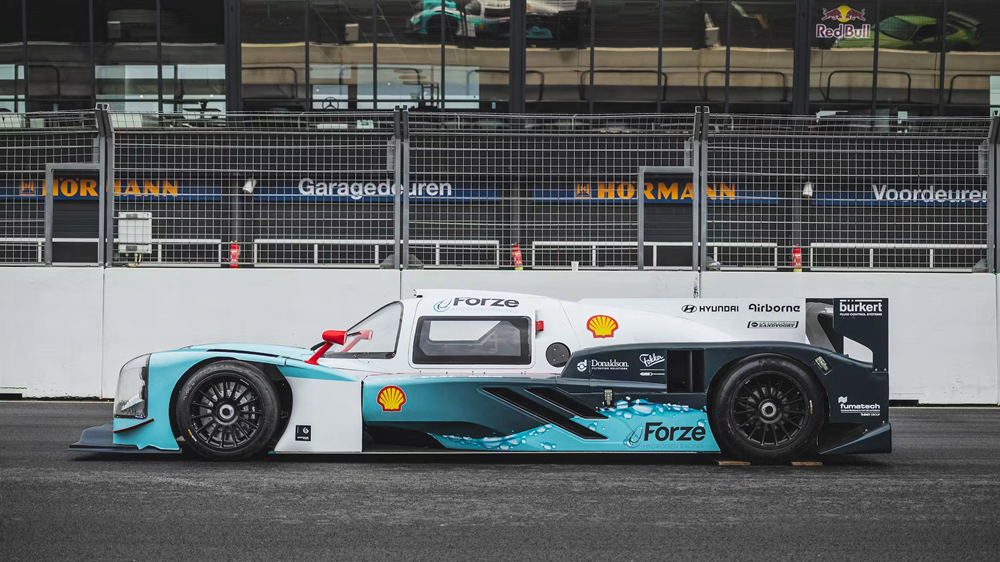
Where did e-Rovers gain their inside hydrogen (H2) experience? We participated as an initiator with Race-the-Green, together with a few Paris-Dakar drivers. A project to complete the Paris-Dakar rally on hydrogen and batteries using our powerful SRM electric motor. We participated to TU Forze-Delft with the H2 race car. The project was discontinued by us in 2022 due to the inability to find a sponsor for Dakar. However, we do have the technical knowledge to convert every e-Rover to hydrogen batteries after 2030. Our H2- backbone is prepared for fuel-cells and tank.
e-Rovers is a genuinely Dutch company specialising in clean energy solutions. However, as few people speak Dutch, we’ve created the site in British English only. If it feels a bit clunky in places, we’re working on it.
You might come across the same fact in several places. Sometimes this is accidental, but often it’s because this information needs to appear in multiple places – if only because many people are in a hurry and scroll through it as easily as a knife through soft butter… It’s a shame, because then you’ll miss out on important details. You can tell from the rattling that we don’t use AI. Artificial Intelligence is often as stupid as a potato. Sorry, potato… My grandad is from York. (lol).
What my grandad knows and many others don’t:
There is no Planet-B
The Earth can no longer cope with the rapid rate of pollution. Award-winning logo, FreePic.
Disclaimer
If, after reading this long page Why? and you feel inspired to do your bit to help prevent climate change, you might consider the following:
Buy far fewer things, fly less – and ideally not at all – get rid of your car, become a vegetarian or, better still, a vegan, and downsize your home. And don’t have children, because they’ll be the ones to suffer. Talk about this with your neighbours, friends and family, and join an action group or political party that’s committed to bringing about change.