All prices are in € euros, you can easily convert these to your own currency. Prices are excluding taxes and FOB transport (from the factory in the Netherlands, Europe).
Tax-discounts often available for exports. There are also many national grants and tax relief schemes available to you – please ask your local authority for more information. We’ll help where we can.

e-Rovers member of Corporate (Social) Responsibility (CSR), Environment, Social & Governance (ESG) en Sustainability funds.

ELECTRIC AXELS
One e-Rovers convertion set = 2 electric-axels (one front and one rear)
€34.500
Including controller(s), TFT control screen, interface ABS (if needed), manual handbrake, electric power steering pump, cruise control and all high voltage wiring to connect with the set.
Because we supply the two e-axles complete, you save enormously on conversion time (labour). You can have the entire conversion done at your local garage in three days. More information Dealers page. We ship the sets all over the world.
Note: Prices will apply if we are able to start to produce 25 sets in one batch.
BATTERY PACKS and RANGE
€4.500 up to €18.000 (prices are falling every day)
We made universal (and pre-heated) strong and watertight aluminium boxes that can be easily bold safely under your 4×4. You simply choose how many boxes you need (based on your expected distance to travel). 1 box range is 100km/60miles, so 4 boxes 400km/250miles). We use 4 boxes for the long range package.
We do bi-directional charging since 2023. Use your EV as a home battery too. Our back-bone is hydrogen ready.
Note: For many nature conservationists, estate managers or safari parcs in Africa, 160 km/100 miles per day is usually sufficient. Sometimes less.
We manufacture one type of box (filled with battery cells) under the premise that each box is the same and fits under any 4×4 vehicle. This saves money (to produce) and allows you to add more boxes at any time (if your distance increases, for example). If the 4×4 car has a self-supporting body (not a separate chassis), then it will be handled differently. Then we’ll find a safe place in the 4×4 car.
Bi-directional connection to your home
This is called a home battery. It’s also fitted in your e-Rovers. Lovely. When an electric car draws power from the grid via a standard charging point, this is known as alternating current (AC). However, the car’s battery operates on direct current (DC). When charging, the electricity must therefore be converted from AC to DC.
The main difference between AC and DC charging is where the conversion takes place. With an AC charging point, the on-board charger in the car must convert the current into direct current for the battery.
With a DC charging point, the conversion takes place outside the car and the charging unit supplies direct current directly to the EV’s battery.
This difference is important for bi-directional charging. After all, with an AC charging point, the inverter in the car must also be able to convert electricity from the battery back into alternating current for feed-in. With a DC system for bi-directional charging, this conversion takes place in the charging point itself.
AC charging points are generally simpler and cheaper, especially if charging the EV is the main purpose. Fast DC charging points are now mainly found on motorways. And as for DC charging at home, you’re almost there. e-Rovers also supplies bidirectional connections.
An EV usually has a much larger battery than a separate home battery, so it’s very cost-effective. It means you don’t need a home battery driving an e-Rovers. Bam.
Please search for yourself using the following keywords: ERE certificates, communication standard for b-idirectional charging ISO 15118-20, vehicle-to-home (V2H, using EV battery power at home) or vehicle-to-grid (V2G, feeding electricity back into the grid). (source: change-inc, Hans Olislagers)

We explained this on the first page and Why page. Why lithium isn’t the new asbestos and why almost everything can be reused. And no children die in the mines.
95% of metals recovered today. The Dutch company Back to Battery can process any black mass from any type of lithium-ion battery using a special hydrometallurgical process. This includes batteries from mobile phones, other electrical appliances, bicycles and cars. “We are very flexible. Our solvent can handle anything and extract raw materials from all existing types of battery chemistry,” says Lans (Brightlands Chemelot Campus). (source: change.inc Sept26)
Financing options
If you are unable to cover the costs but still wish to have the work carried out today, we’ll show you belowmore options for you (FINANCING the EV job).

The above green Toyota Land Cruiser is a Euro3 diesel that currently has to be driven daily in a nature reserve, without a number plate (because it’s too dirty-exhaust fumes). Call us now Staatsbosbeheer to have this green Toyota converted to EV (Oostvaardersplassen car). We have the project budget for it. We’ve been talking to a brick government wall for years… This example shows how NOT to do it…
Because public funds are not allowed to go directly to new business, funding for green-based initiatives often ends up with consultants – highly qualified people running workshops and producing memos. Or they’re only allowed to lease a car from an importer who doesn’t have any EVs on offer that can be used on rough terrain. That sounds stupido, doesn’t it? And it is.
But the people who are actually working on the transition have absolutely no time for that. It’s as if they’re two parallel worlds. It would be good if the government were to take a less directive approach and focus more on facilitating.
Track 2026: a government wants to go green. It buys e-sets from e-Rovers. Before long, in no time it has become a much greener public sector organisation. That’s how it should be done. All this talk – it’s just a waste of money that could be spent on actually turning green. Switch from burning fuel to driving 4×4 electric with your own solar panels on the roof. That’s the way forward. Stop talking. Start DOING.
CHARGING
10 minutes for every 100km/60miles range. We do bi-directional charging: your truck connect to your home as (surplus home-) battery. We do preheat during charging in cold winter conditions. Thanks to its excellent insulation, the battery box remains above 12 degrees Celsius throughout the day for maximum power output.
SOLAR on your car-roof
One advantage of a blocksized off-road vehicle is that new developed solar panels (perovskiet) can easily be fitted to it. These panels are being developed that can curve to follow the contours of the vehicle. The brand-new TU-TNO spin-off, Perovion Technologies and Lightyear, is set to roll out the new technology commercially. But expensive. You must realise, however, that whilst the limited surface area does generate small electric power for the car’s battery, roughly three days in the sun (no driving) will only provide enough power for a minor 100km/60-mile drive.
SPEED and CONSUMPTION
Consumption 21 to 24 kWu per 100km/60miles (WLTP). During braking or slowing down, current returns back to the battery (32% return effectively). So driving in the city give you more range. Funny no?
The maximum speed is limited at 115km/72miles to reach the maximum range. Speed up to 160km/100miles is possible (we can tune it up), but then the range drops 30% or more, extra speed is not free. The power comes from somewhere (battery only). We do this limiter because the streamline (a big square 4×4 bungalow) and the size of a 4×4 trucks generate a lot of air resistance. This doubles quite quickly once it exceeds 130km/80miles speeding.
Dash
We retain the original appearance of the instrument cluster section of the dashboard. Behind the edges of the dials, we install a screen (lcd, oled) with a rounded graphic design that matches the original look. This is, of course, tailored to each make and model. For safety reasons, we do not use a touchscreen, and the switches for the windscreen wipers and other functions remain in place.
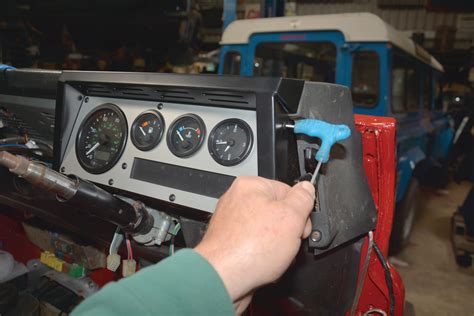
In Australia, for example, new aluminium dashboards are being manufactured and can be ordered as an optional extra. We do LHD and RHD offcourse. (pic is RHD)
e-axel SPECIFICATIONS
Our 3-in-1 has 94Kw (2 axels x 47kW). Maximum of 2,900 revolutions (rpm). Gives a basic top speed of 115km/72miles. Because of these low revs, no gearsboxes are needed anymore, we told you. The e-Rovers e-motor is a SRM (Switched Reluctance Motor), is a DC electric motor. We develop and make it, it was not for sale. Check the link:
https://en.wikipedia.org/wiki/Switched_reluctance_motor
Strong Torque total 580/1.682 Nm. (Hi/Low) It is hard to imagine the high torque compared to the original fuel lower engine torque. Instinctively the 4×4 car feels as a 280 horsepower car/truck. More power has gone under “the bonnet” overnight. Torque all over the place. We switch between high and low gearing using a planetary system.
Towing max 3.500kg. Your range will go down approx 25%. You can take your horse or sailboat with you on a trailer. You cross rivers as before, everything is robust and watertight built in our factory.
As most power is required when pulling away from stand-stil, we switch to high gear at 50km/h./30miles automaticly. The advantage is that, overall, we need a much smaller electric motor. Easier to fit, smaller and cheaper. At 100 km/h, the 2 x 47 kW is more than enough.
All that gearbox resistance are gone. Our SRM electric motor has two output shafts, these are directly connected to the centre of each wheel. There is nothing in between that lost power in resistance. Read the Why page and yellow pic on page 1. 2x47kW is enouth.
WEIGHT
Our SRM electric motor weighs 76 kg, an original differential weighs 36 kg. Our aluminum axle weighs 21 kg less (than iron one) that leaves 19 kg additional unsprung weight. This is ok, after all a tuft of wet mud also weighs something like that. A change to aluminum rims (instead of steel) we do reduce this to +6 kg in total. You can simply keep your original shock absorbers, brakes and springs/airsuspention. This applies to both axles.
Because we remove the engine, all 3 gearboxes and the two differentials, we remove 485kg. (varies by brand). In short, our entire set weighs less than 485 kg, including the 2 SRM and batteries in the 4 long-distance boxes. If you need fewer boxes, the entire car will be lighter (curb weight).


HEATING and COOLING
€3.850 for a basic heat/cool/vent kit in the car (based on a heat pump technology). If the fuel engine is gone, we will also have no hot water to heat you. We designed this unit in the most efficient way (in a seperate box in front of your car, in the space where your old engine was). So including airconditioning as extra for free, but this set is not always needed to buy.
Our e-set fits into all 4x4s that have been made and are yet to be made in the future
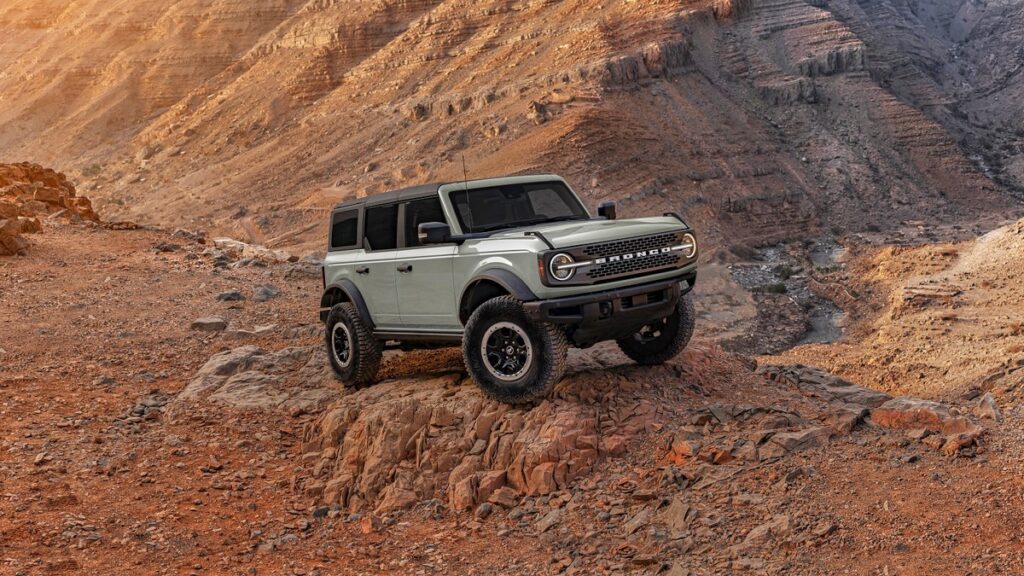
Above the new fuel 4×4 Ford Bronco for 2028
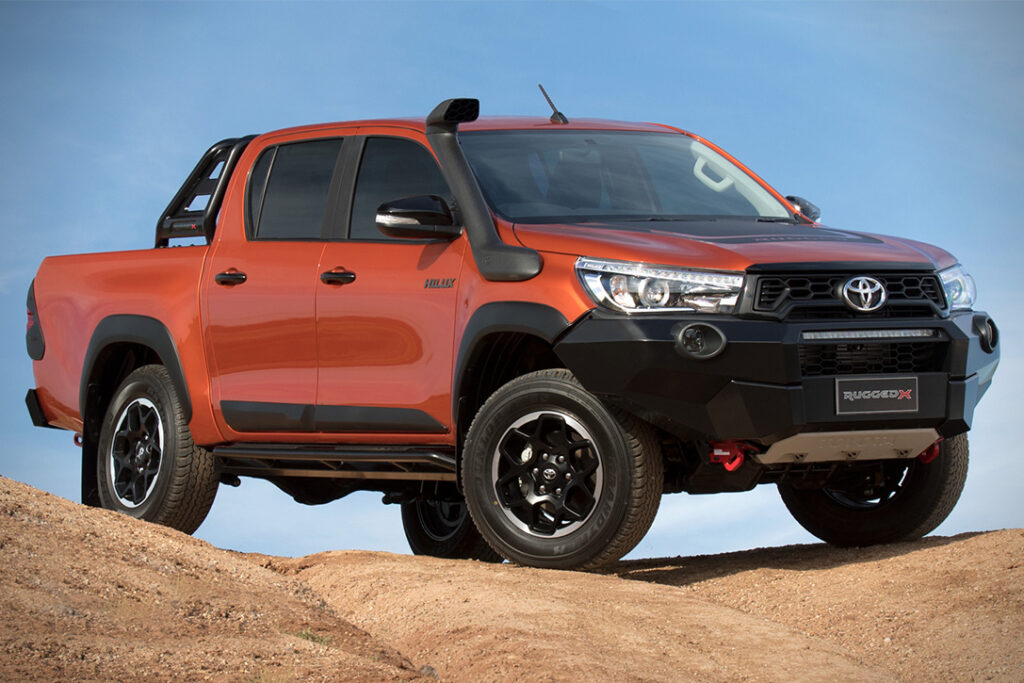
And the 2025 orange fuel Toyota Pick Up above. These Pick-up trucks are a good example of a rigid rear axle and at the front the differential is cast into the engine crankcase. We also make a suitable set for these pick-ups: a rigid e-axle in the rear and the short drive shafts e-motor in the front (fixed to the chassis bolted)
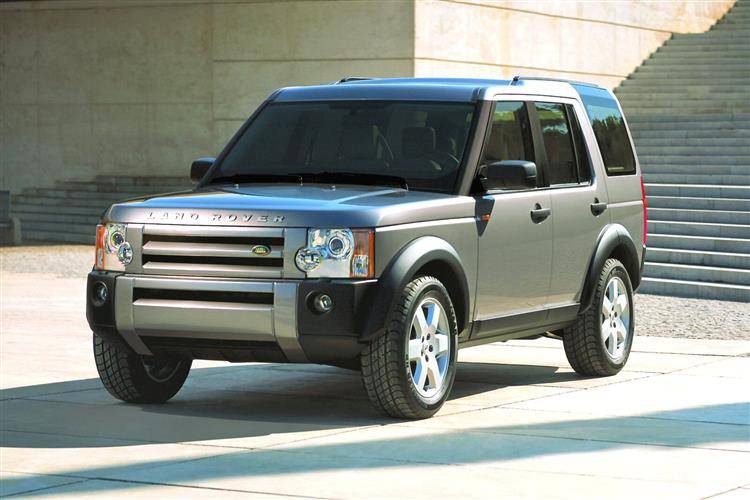
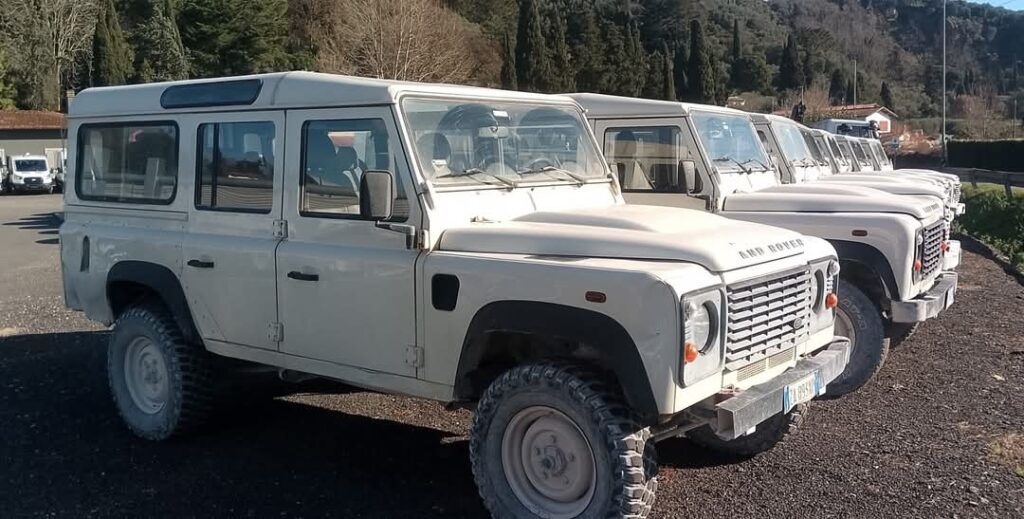
Or below the used white LR Defenders from Italy (for the marble mines in Carrara): re-use them electric. Buying and converting an Defender like this will set you back €60,000 or less.
Electric is getting better for your wallet every day.
How to calculate? TCO = https://en.wikipedia.org/wiki/Total_cost_of_ownership

FINANCING the EV job
“These are the people who are complaining at the petrol station about high fuel prices: they want to drive an electric4x4 car, but think they can’t afford one”. No?
Look, you’re currently paying €2.75 per litre, aren’t you? If you were to cover the same distance in an electric car, it would only cost you €0.75. That’s a huge difference every time you fill up. Example: if you finance the purchase of our kit with a monthly payment €100 LESS than your total monthly 4×4 car costs (TCO), you can start driving an EV next week for €100 LESS per month. An instant discount AND you can start driving an electric car straight away. This varies slightly by country, but after 6 years you will have paid off the kit, enjoyed a saving of 6years x 12month x €100 AND the e-Rovers kit and batteries is now yours. Due to rising fuel costs, that has now stretched to four years…( Sept 2026)
During those 6 years, because it has already been converted, the 4×4 will have increased in value; after all, a diesel 4×4 drops in selling-price, but e-conversion costs rise…. It’s the same as with a house: half of the total conversion costs are added to the value of your newly converted home. So financing the conversion is THE way to go if you don’t happen to have the cash to hand.
Even with the interest you pay. Depending on the country, you may also be eligible for a tax deduction for driving a clean vehicle. In that case, it’s even quicker period and waiting (for better times) costs you money. You’ll feel the difference in your wallet.
OTHER FINANCING such for AFRICA
“Diesel is a major expense over a distance of around 23,000 kilometres , but prices vary enormously: in Western Sahara, Nigeria and Angola, it is sometimes very cheap (0.9dollar/ltr); in most other countries, prices remain stable (1.25dollar/lt); but it is generally always cheaper than in Europe (2.65dollar/lt). Kenia is 1.55dollar/ltr). The key factor is your vehicle’s fuel consumption. We averaged around 14 litres per 100 kilometres, making diesel our biggest expense of the whole trip. (Toyota Landcruiser 80, susieandtheelephants.com).
Then you do a quick calculation: Charging with solar is free, the investment in solar isn’t that much (10K?) and, based on the above, you can quickly work out that there’s a fast payback period. You could take out a loan at 5% interest, in which case the repayment term would be short.
Roughly speaking, an EV is three-quarters cheaper than continuing to use any fuel (per km/mile/TCO). Bear in mind that fuel is set to become much more expensive very soon, whilst electricity is actually getting cheaper (thanks to significant gains in efficiency from wind and solar power, and battery storage).
If you have any better ideas on how this could be funded, please let us know, especially if you run a finance company. We think it would be great to work together, after all, for a cleaner world.
NoWoS our partner
Note that NOWOS does not directly do :
RE-USE: Why? “Re-use” under EU law applies to waste. Batteries serviced by NOWOS are serviced and repaired while still classified as product, not waste, ensuring full compliance with EU regulations.
‘REFURBISHMENT’ : Why? Refurbishing is undefined in EU law for batteries; typically refers to partial restoration without full compliance validation. The proper term is REPAIR. Repair is what NOWOS does.
REMANUFACTURING: Why? While NOWOS may help customers prepare for remanufacturing, under Regulation (EU) 2023/1542, remanufactured batteries are treated as new products from a battery producer. NOWOS is not a producer. In select cases, NOWOS can help our clients with the preparation for remanufacturing. This involves full diagnostics, testing, and quality control.
REGENERATION: Why? NOWOS does not regenerate batteries or chemically restore degraded battery cells. Chemically restoring degraded battery cells through additives or reactivation techniques pose regulatory and safety risks.
RECONDITIONING: Why? Reconditioning is undefined in EU law for batteries and lacks the rigor and compliance required for lithium-ion batteries.
RECOVERY: Why? Energy recovery is not aligned with lithium-ion battery safety or sustainability. Is not defined by a EU Legal Definition.
PRODUCE OR ASSEMBLE BATTERIES: Why? NOWOS does not produce batteries or certify new products.
RECYCLE: NOWOS is not a recycler and does not recycle batteries. We have a network of specialized EU-compliant recycling partners.
Furture batteries
Solid-state batteries: the pros and cons
A conventional lithium-ion battery contains a conductive liquid (the electrolyte) between the positive and negative terminals (the anode and cathode), with a separating layer (the separator) in the middle. During charging and discharging, lithium ions move through the liquid between the cathode and the anode.
In a solid-state battery, as the name suggests, the electrolyte is made of a solid material. This has, broadly speaking, three major advantages, but there are also some drawbacks.
The main advantages of solid-state batteries are:
Higher energy density per unit of volume and weight: solid-state batteries can store more energy in a smaller space and with a relatively low weight. This is why they offer better range.
Safety: the liquid used in lithium-ion batteries carries certain risks, such as the risk of leakage and fire. In theory, such risks are lower when using a solid-state material.
Faster charging: the composition of solid-state batteries enables faster charging, making the ‘refuelling experience’ more similar to that of cars with conventional internal combustion engines.
CHANGE THE DRIVE, NOT THE CAR
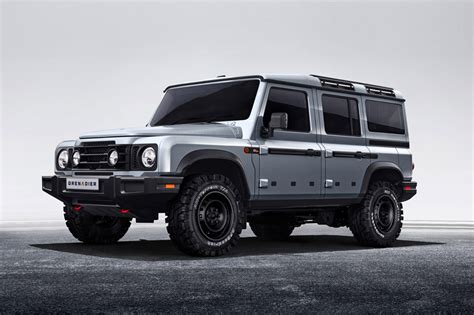
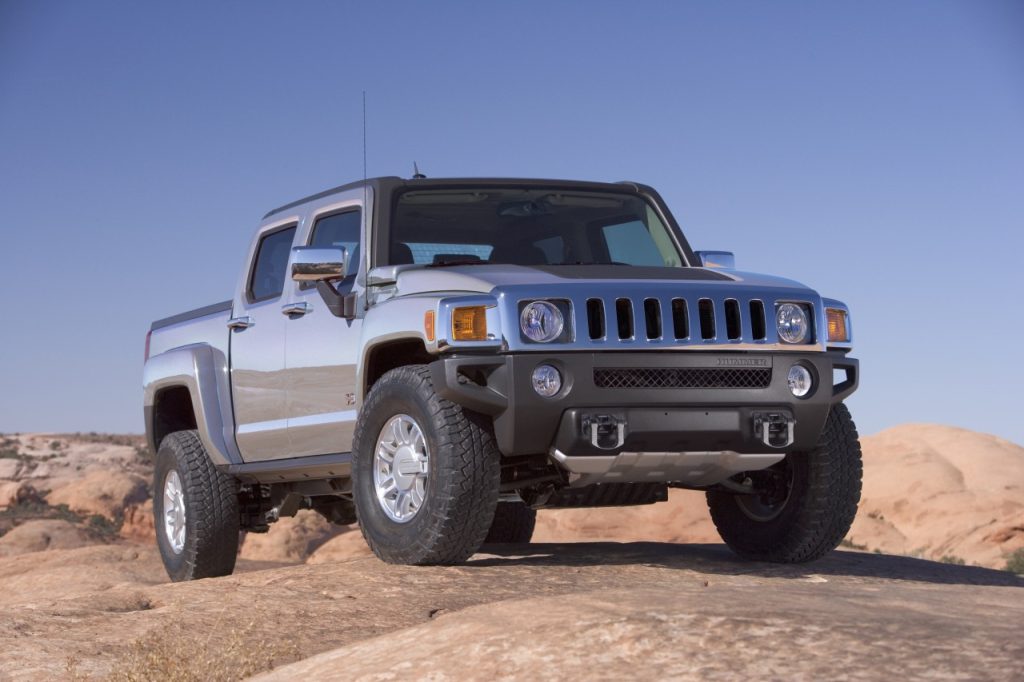
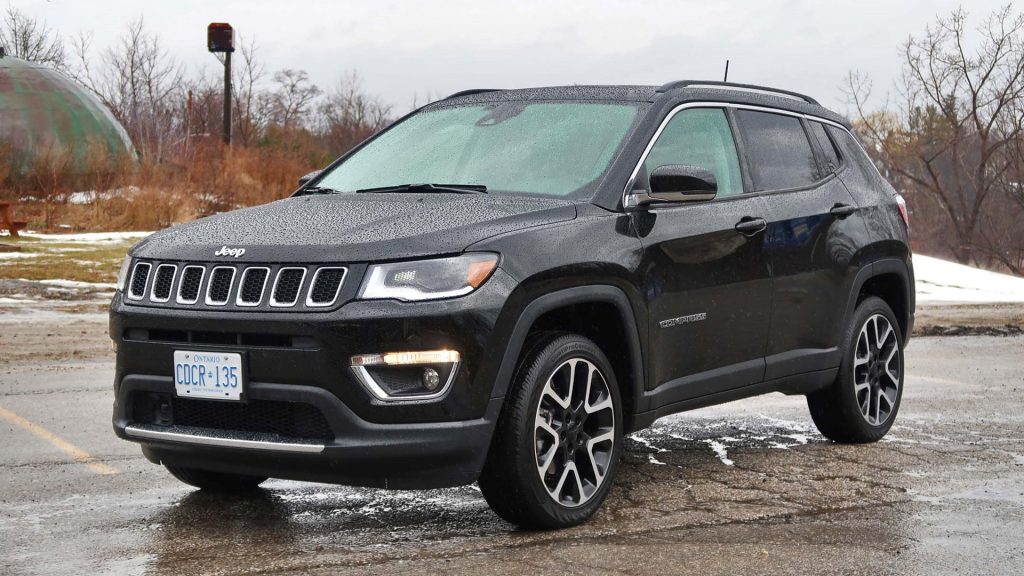
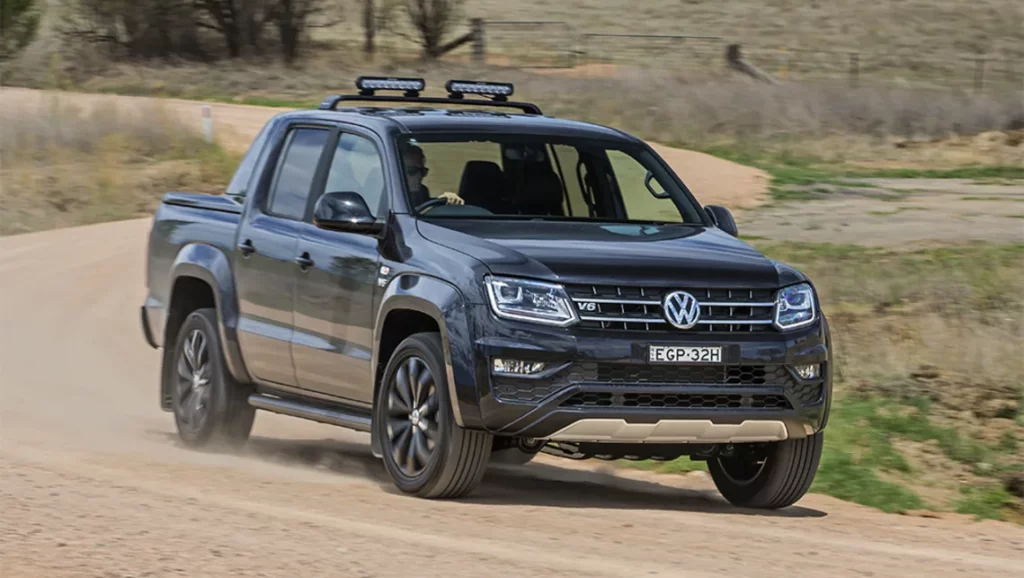
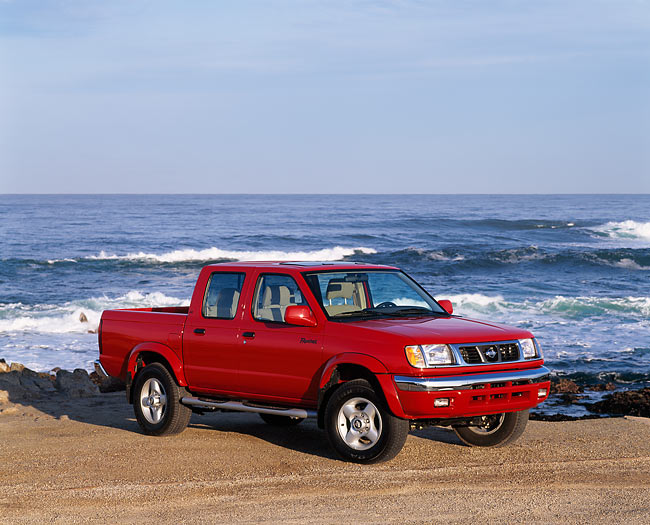
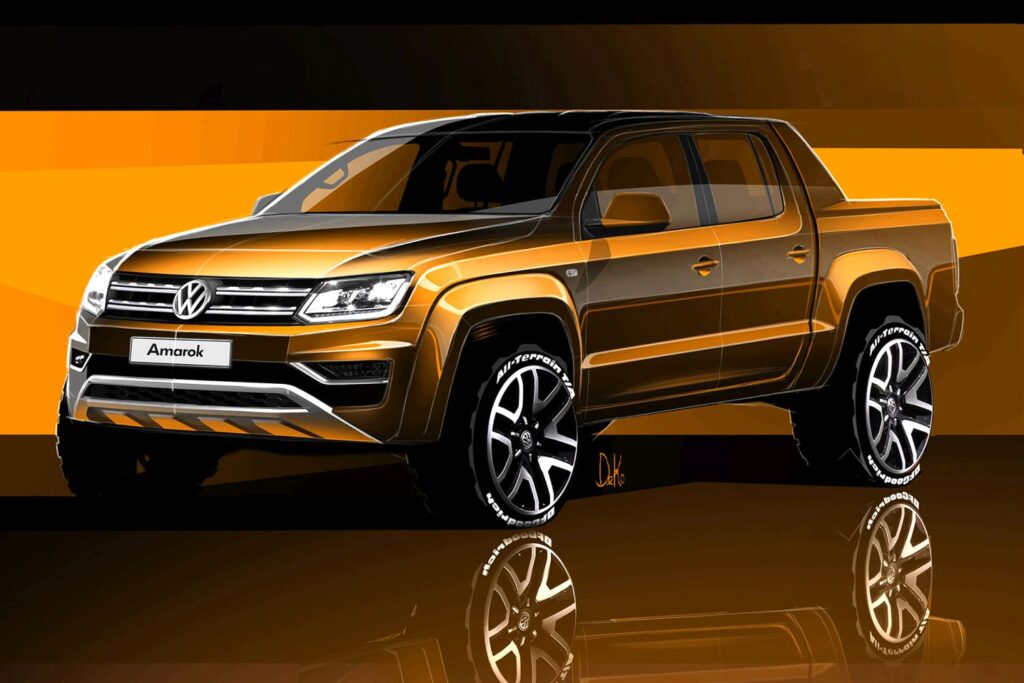
Below a photo overview of all 4×4 vehicles that we consider to be our market. At present, a new e-Rovers one is added every month:





The big Steyr Unimog Benz we convert also to electric. For this, we are using the larger and heavier 155Kw e-engine. That development is almost complete.